How to Choose a Reliable Electrician for Your Home Projects
When the lights go out or a breaker trips in the middle of the night, panic can set in fast. It’s easy to feel lost, especially when you need a 24 Hour Service near you—right now. At A&E Electrical, we understand how urgent and stressful electrical problems can be. Your family’s safety and comfort depend on getting things fixed quickly, but hiring the wrong person can make things much worse.
Choosing a reliable electrician for your home projects isn’t just about convenience. It’s about trust, peace of mind, and protecting your investment. Don’t gamble with your home’s wiring—know exactly what to look for before you pick up the phone.
Why Credentials Matter ⚡
Credentials are more than shiny badges or paperwork. They’re proof an electrician has the skills and training to keep your home safe. Think of credentials like a pilot’s license—you wouldn’t want someone flying your plane if they didn’t have one.
- Licensing: A licensed electrician has passed state-mandated exams and knows the National Electrical Code (NEC). For residential work, this means they understand rules for outlets, wiring, and safety devices in homes. Commercial electricians face extra requirements—bigger loads, different codes, and sometimes special permits.
- Insurance: Liability and worker’s compensation insurance protect you if something goes wrong. If an uninsured worker gets hurt on your property, you could be on the hook for damages.
- Certifications: Some electricians go above and beyond, earning additional certifications for things like home automation, EV chargers, or smart home systems.
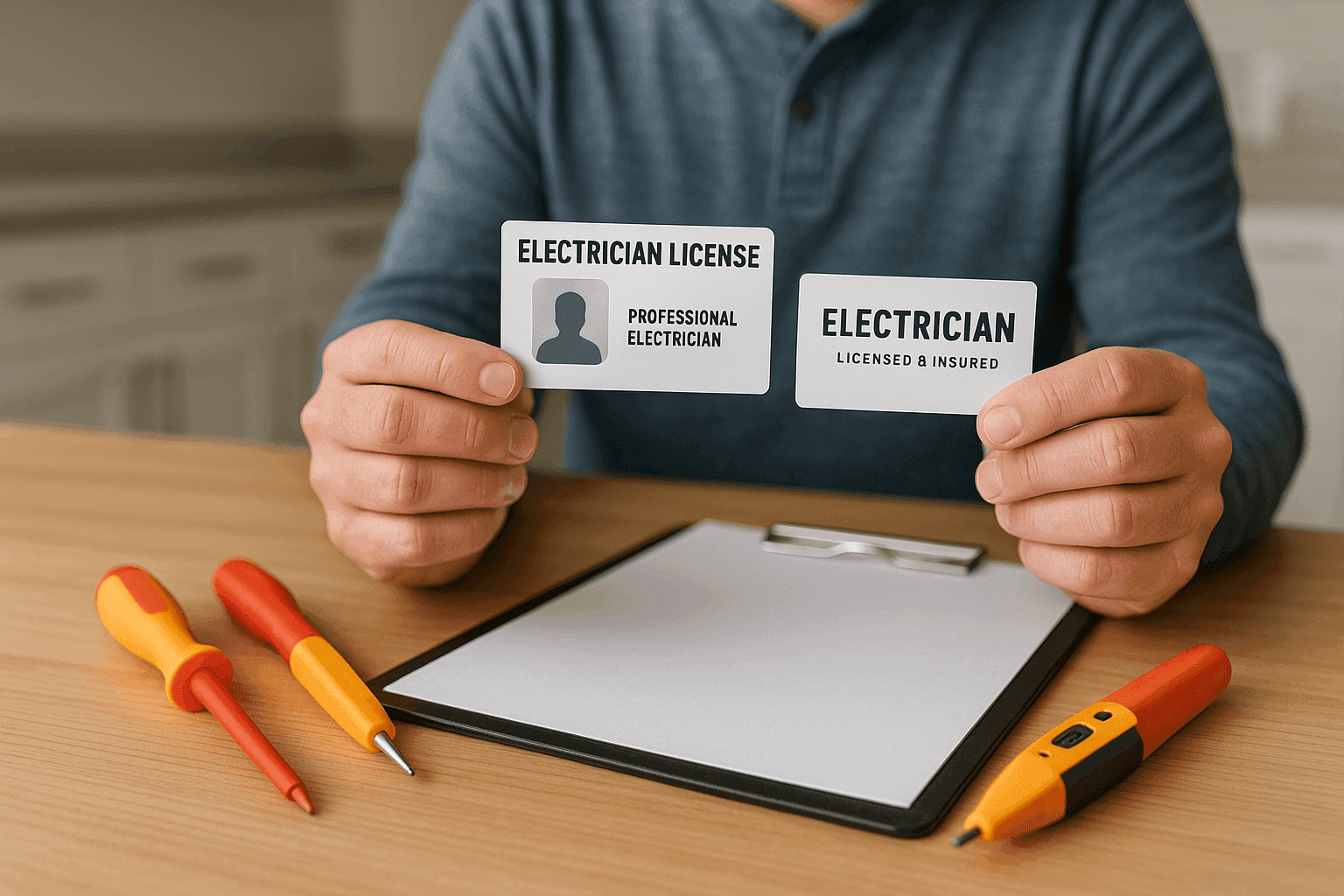
Pro tip: Always ask to see a copy of the electrician’s license and insurance before work begins. A trustworthy emergency electrician will never hesitate to provide this.
Residential vs. Commercial Qualifications
Not all electricians are created equal. Residential work focuses on homes and small apartments—think outlets, lighting, ceiling fans, and safety inspections. Commercial electricians handle larger buildings with more complex systems, like high-voltage wiring and motor controls.
For most homeowners, you want a pro who specializes in residential electrical services. If your project involves both home and business properties, make sure your electrician is qualified for both.
Questions to Ask Before Hiring
Don’t be shy—good questions keep your family safe and your wallet happy. Here’s what to ask before hiring:
- Are you licensed and insured for residential work?
- How much experience do you have with my type of project? (e.g., re-wiring, EV charger installation, lighting upgrades)
- Can you provide references or reviews from past residential customers?
- Will you provide a written estimate? Get details in writing, so there are no surprises later.
- Who will perform the work? Sometimes, companies send subcontractors. Make sure everyone on-site is qualified.
- What’s your response time for emergency electrician calls? Fast, 24 Hour Service near you matters if something goes wrong at 2 a.m.
A&E Electrical believes in clear answers to every question. Our team is always happy to walk you through the process, step by step.
Red Flags to Avoid 🚩
Not every electrician has your best interests at heart. Watch out for these warning signs:
- No proof of license or insurance: If someone dodges the question or says “trust me,” walk away.
- Vague or verbal-only estimates: A handshake isn’t enough. Get everything in writing.
- Pressure tactics: If someone insists you decide “right now” or threatens rising prices, it’s a bad sign.
- Unmarked vehicles or lack of uniform: Professionals take pride in their work and their appearance.
- No business address or full contact information: Transparency matters.
- Requests for large cash payments upfront: A small deposit is typical, but big demands are a red flag.
Scammers thrive on panic—especially during emergencies. Trust your gut, and don’t let urgency override smart decisions.
Verifying Licenses and Insurance
How do you know if an electrician’s paperwork is real? Here’s how:
- Ask for documentation: A genuine electrician will show you their license and insurance card, no excuses.
- Check with your state licensing board: Most states have online databases where you can look up licenses by name or number.
- Ask for insurance details: Contact the insurance provider to confirm coverage if you’re unsure.
- Look for professional memberships: Groups like the National Fire Protection Association (NFPA) or International Association of Electrical Inspectors (IAEI) add credibility.
A&E Electrical keeps all credentials current and available on request—because your safety is non-negotiable.
Understanding Estimates and Scope
Every homeowner dreads surprise bills. Protect yourself by understanding how estimates work:
- Written estimates: Always ask for a detailed, written estimate. This should include labor, materials, and a timeline.
- Scope of work: Make sure the electrician explains exactly what they plan to do. If you hear unexplained “extra fees,” ask for clarification.
- Permits: For bigger jobs—like rewiring or installing new circuits—permits may be required by your local building department. Ask if this is included in the estimate.
A clear estimate is like a roadmap. It shows exactly where you’re headed and what it should cost to get there.
Real-World Steps: How to Vet an Electrician
Let’s break it down:
- Start with research: Search for “emergency electrician” or “24 Hour Service near you” and make a short list of reputable companies.
- Read reviews: Focus on comments about reliability, response time, and professionalism. Don’t let one bad review outweigh dozens of good ones.
- Check credentials: Ask for license and insurance—then verify them.
- Ask questions: Use the checklist above!
- Get a written estimate: Compare a couple of options if time allows.
- Trust your instincts: If something feels off, keep looking.
The A&E Electrical Difference
At A&E Electrical, we believe in simple, honest service—24 hours a day. Every technician is fully certified for residential work, background checked, and trained to the latest safety standards. Whether you need a quick repair, a full rewire, or just peace of mind, we’re here to help your home run safely.
Quick Safety Checklist for Homeowners ✅
A few steps can make a world of difference before any electrician arrives:
- Unplug appliances from affected outlets.
- Don’t touch exposed wires or wet areas—electricity and water never mix.
- Flip the main breaker if you suspect a serious fault or burning smell.
- Keep children and pets away from electrical hazards.
- Gather details: When did the issue start? What was running at the time?
Stay safe, stay alert—and call for help if you’re unsure.
DIY vs. Call a Pro
Some jobs are weekend projects. Others need a pro’s touch.
DIY-friendly:
- Changing light bulbs
- Resetting a tripped breaker
- Swapping out faceplates
Call a professional:
- Rewiring circuits
- Installing new outlets or switches
- Upgrading panels and breakers
- Electrical system design or automation
- Any emergency repairs (sparks, burning smells, outages)
If you need to ask, it’s probably time to call in an emergency electrician.
What Pros Do On Arrival
Wondering what to expect when the electrician rings your doorbell? Here’s the usual routine:
- Inspect the problem area safely
- Test circuits and outlets with proper equipment
- Explain what’s wrong in clear language
- Offer options—repair, replace, or upgrade—without pressure
- Provide a written summary of work for your records
A good electrician won’t just fix the issue—they’ll make sure you know what happened and how to avoid it next time.
Prevention & Maintenance
A few small habits can prevent big headaches later:
- Schedule regular electrical safety inspections (per the National Electrical Code recommendations)
- Upgrade old, two-prong outlets to grounded, child-safe models
- Install surge protection for sensitive electronics
- Test smoke and carbon monoxide detectors every month
- Don’t overload outlets or extension cords
Proactive maintenance today means fewer emergencies tomorrow.
Costs & Time Factors
You want to know what you’re paying for—and how long it’ll take.
- Simple jobs: Replacing switches or outlets usually takes less than an hour.
- Medium jobs: Installing ceiling fans, lighting, or EV chargers might take a few hours.
- Complex work: Rewiring, panel upgrades, or troubleshooting faults can span a day or more.
Costs depend on job size, materials, and emergency callouts. Emergency electrician services, especially at night or holidays, may cost more due to urgency and availability.
When It’s an Emergency
Some electrical issues just can’t wait:
- Power loss to your whole home
- Burning smells, smoke, or visible sparks
- Flooded outlets or wiring after water leaks
- Flickering lights throughout the house
In these moments, don’t hesitate. Turn off the main power if you can do so safely, and call a 24 Hour Service near you immediately. Your safety comes first.
FAQ
How do I know if I need a professional electrician?
If you’re dealing with anything beyond a blown fuse or lightbulb, it’s safer to call a pro. Electrical work done wrong can be dangerous or even deadly.
Can I check an electrician’s license myself?
Yes. Most state licensing boards have online lookup tools. Don’t be afraid to ask for a license number and verify it.
What should I do before the electrician arrives?
Unplug appliances in the affected area, keep children away, and note when the problem started. Don’t attempt any repairs if you’re unsure.
How often should I schedule electrical safety inspections?
The National Fire Protection Association recommends an inspection every 3–5 years, or when buying/selling a home.
Local and Seasonal Considerations 🏡
Weather, seasons, and local regulations can all impact your electrical needs.
- Storm season: Power surges and outages are more common. Surge protection and backup generators help keep your home running.
- Older homes: Many houses built before the 1980s need updated wiring and circuit breakers.
- Pool and spa season: Special electrical codes apply for outdoor wiring and water features.
- Home automation: Smart systems are becoming standard—make sure your electrician is up-to-date.
Always ask about local permit requirements and code updates. A good electrician will know exactly what your area needs.
Ready to feel confident about your next home project? Call A&E Electrical now — or reach us anytime at 888-873-6160 .